Monday, June 6, 2011

Sorting it out


Four weeks off work so far, to recover from my very odd and extreme surgical adventure. What was my vagina trying to tell me?

I'm just now starting to sort things out. Practical, tangible things I can understand.

Old cups and dishes, clothing hardly worn, shoes that don't fit anymore, old meds, old paperwork, dying plants, crappy CDs, and uninteresting books.

Sorting the videos and photos that were never organized, trying to fulfill promises that I made to myself and others to get the history recorded, get it down, get it all sorted out.

And still it eludes me. The one thing I can't seem to sort out. Why did this happen? How can I make peace with it? Where do I go from here if the surgery wasn't successful? Worst of all, where do I go from here if it was?

Sunday, February 27, 2011

We Were Here - and some of us still are

There is a new documentary out titled "We Were Here." It is about the AIDS epidemic in San Francisco in the 1980s. A local movie critic wrote about the few surviving gay men and what they saw and went through. Here is a link to that review, and my response.


There are other survivors from those days living among us - sisters, mothers, brothers, fathers, friends, and the lesbian community in SF. We all endured inestimable pain and grief, and did what we could for our loved ones, and for strangers. If anyone who is taking part in risky sexual practices (including the notorious tent at Burning Man) wants to know the truth, I'm here to tell. Sadly, youth can = denial, and denial can = death. It was only yesterday. You just have no idea.

In loving memory of all,
Mark
John
Johnathan
Rick
Don
Marty
Stanley
Terry


Thursday, October 14, 2010

The 33 Miners


Luis Urzua


33 miners below
Not looking into an abyss, but from it.
Each man gazes up and sees the unrelenting, ancient rock
sealing him in doom, in his tomb.

69 days of not knowing
how it will be, if they will be.
69 days of hope, despair, grief and doubt.
Deep below and high above, leaders emerge,
courage ebbs and flows, and frailties come to the fore.

Hope arrives as the urgency of birth, thrusting, piercing the rock
One by one, the men are lifted into a new unknown,
Newborns delivered from the earth to the waiting arms of a joyous world.

Tuesday, August 17, 2010

24 Hour Privacy


So, last weekend I went to work out, and my favorite young guy at the desk said in the very nicest way, that 24 Hour Fitness was now going to have everyone type in their phone number and then put their finger in a little machine so no one has to remember their i.d.'s anymore. I felt strange, but as so many other times in my life, I went ahead and did this and instantly regretted it.

Yesterday morning, my alarm clock radio woke me up to a story on KQED news about 24 Hour Fitness now having everyone give them their fingerprint to enter the gym. Reportedly, 24 Hour Fitness had 97% success rate with their customers, only 3% opting out. It haunted me all day long. Last night, I went and talked to my favorite young guy at the desk again and asked him to delete my fingerprint from the system and opt me out. He seemed taken aback and wondered why. I told him that I don't even let Safeway know what I'm buying, that I value my privacy. He didn't get it.

After my workout, I went back to see him and told him the story of the Palo Alto kids who, when they were young, went to Farrell's Ice Cream and signed up a whole bunch of phony names and birthdates so they could get free ice cream cones every month. Years later, those phony names received notices that it was time for them to sign up for the draft. I tried to explain to my favorite young guy at the desk how industry sometimes colludes with the government and military. He seemed completely weirded out by me, and said, oh, ok, I get it. He doesn't get it! So now they probably still have my fingerprint, but I'll keep using my i.d. card anyway.

Oh, and I also told my favorite guy at the desk how this was probably his boss's way of eliminating some jobs at the front desk. Now, that he got.

Sunday, August 15, 2010

The Prize


She watched him play for the crowd, his eyes meeting the eyes of other women. His words promising that he would be theirs; he would be what their dreams were made of, and their hearts ached for.

She listened with the other women, to the mystery in his voice and the sex in his music. It was a scene she acted in twice a week at the clubs where he played.

She had been one of those women, but she had won his eye. Her trophy, this wanted man, her prize to follow him every night, to try and keep him.

Sunday, June 27, 2010

This is When


Photo by Craig Wolf

This is when she feels the freest.

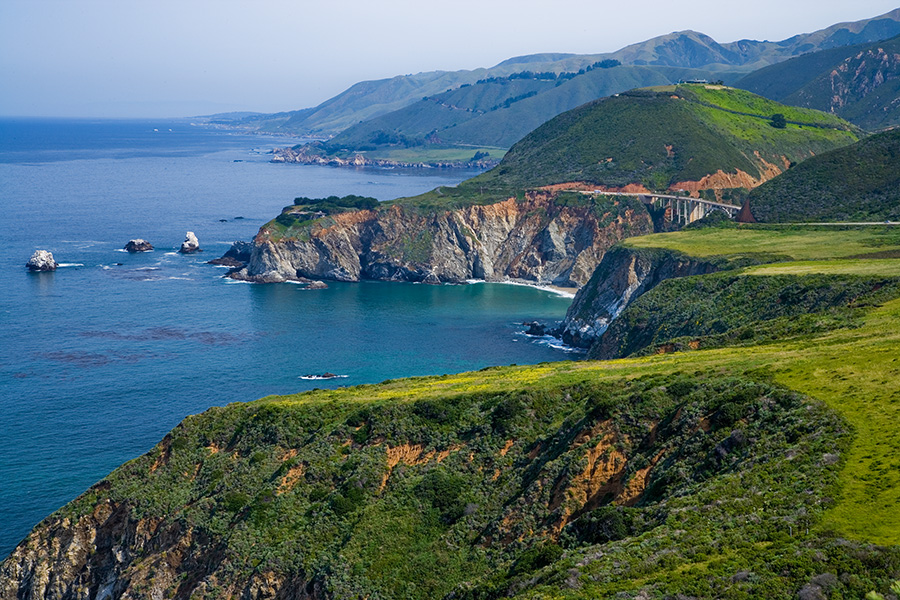
Barreling down Highway One towards Santa Cruz in early morning. The ocean, endless, to her right, in all the colors of blue that blue can be. Pastures, eucalyptus groves, strutting clouds, solitary sand dunes, sheer-terror rock cliffs and autumn colors conspire to pleasure her on the journey.

This is when she feels the safest.

Cocooned in the driver's seat, soothed and energized by Irish ballads, Elgar symphonies and Bob Seger's Silver Bullet band. The music carries her spirit in all directions while her body stays the course.

This is when she feels the most herself.

Her thoughts are her own and uncensored, free-floating, not sticking to anything in particular, not needing to or making sense.

This is when she feels her heart and mind open.

Nothing is impossible or dire. She is aware of timelessness and insignificance and presence and now.

This is when she is.

Tuesday, March 16, 2010

Happy 90th Birthday Aunt Rose!

It is not possible to define a whole person and her life in words. So much of who we are exists in our internal dialog and private moments. Actions and words – hardly a full measure of a person – are all we usually have to go by when remembering someone. There is also the problem of time – how long did we know her, in what part of her life, in what context? Was she our mother, child, aunt, friend, lover, wife? With this in mind, I will tell you who Rose Hays was to me – from what she and others told me, and what I personally experienced of her.

Born on March 17, 1920 to Mary Myrtle and Ural Ambrose Hays in Missouri, Rose’s full given name was Ural Rose Hays. Her father hoped for a son, and so gave her his own first name. It was the first of many gifts from her father that Rose treasured. While a toddler, her sister, also a baby, died of meningitis. Rose told me that the family, and especially her mother, were shattered by the experience. She herself felt a great loss at this very young age.

While playing at the age of 4 or 5, Rose injured her hip and it became displaced. It would not heal, and it was discovered that she had contracted bovine tuberculosis in the joint, probably from unpasteurized milk on the farm. She underwent numerous surgeries, treatments, and hospitalizations while growing up during the Depression. For at least one whole year, Rose lived in a full body cast, laid out on a large table in the living room, unable to move. She remembered feeling she would suffocate as she began to outgrow the cast. It was during this incapacity that she developed a great ability to think abstractly. Schooled at home by her father, she found herself able to construct things in her mind – clothing, furniture, even houses.

During one bout of tuberculosis, Rose’s parents uncharacteristically bought her a suit of new clothes. Knowing that the family never bought clothing from stores, and that she was very ill, she realized this was to be her funeral outfit. Forcing herself to stay conscious all night, she survived, and firmly believed that if she had fallen asleep, she would have died.

After enduring bone grafts, a collapsed spine, and ignorant and often cruel doctors and nurses, Rose recovered enough to attend high school. Her growth had been stunted and she would never reach over 4’10” in her life. She had been left with one leg considerably shorter than the other, and had to live with a cane and an elevated shoe on one foot. A natural beauty, she attracted boys in high school, but would ultimately be rejected for her disability. She once told me that she decided early on in her life to not be dependent on another person for her happiness, and that she would probably forego marriage and motherhood. She accepted that most of her happiness would have to come from herself.

After graduating high school, Rose’s main ambition was to become a clothing designer. Her father wished for a more (to him) practical education, and Rose was sent off to Quincy, Illinois to attend business college. While working in a shoe factory after college, World War II broke out and Rose was eager to join the effort. She pleaded with the local postmaster to convince her family that Washington needed her, and eventually her father relented and she left home for good.

Washington DC was the place to be in 1942. Sailors, soldiers and diplomats everywhere – it must have been the most exciting thing Rose could have hoped for. She joined a group of women who rented a house in Arlington, Virginia – women she kept as friends throughout her life. Rose was assigned to a job in the typesetting division of the War Department. Most typesetting was done using hot lead, set by hand; however, the government was just beginning to use a new technology called cold type, and Rose was on the ground floor of this innovation. She worked on the pre-press of all types of printed materials for the military. While in that department, she met several Hollywood directors and actors who were involved in propaganda filmmaking – among them, Frank Capra, John Wayne, and Walt Disney.

Rose worked many grueling hours and told me about how once she had been working late into the night and was proofreading with her bosses. Exhausted, she missed one typo, and they made her start all over again. She was incensed and humiliated, but said this was where she learned about perseverance and conscientiousness in her work. During her time at the War Department, she was awarded a medal by General Dwight Eisenhower for work above and beyond the call of duty.

Late in the war, Rose was working on a Japanese translation book that was quickly going to press – a million copies had been ordered for the troops. She knew that there was to be an invasion, and when the work order was suddenly rescinded, she realized another more terrible end to the war was about to happen. Throughout her life, she was conflicted about the decision to drop nuclear bombs on Japan, knowing what a toll the invasion would also have taken.

Working and living in DC during the war had been exhilarating, and Rose received at least two marriage proposals. One of those men, Ray Hayes, disheartened by her refusal to marry, continued to correspond with her until his death in the 1980s. Rose told me that she felt she could not risk pregnancy, and that she also didn’t think she would like a traditional marriage.

Once the war ended, Rose decided to follow her cousins to San Francisco. There she worked for a couple of pre-press shops, bringing with her the new technology of cold type. At the Smith Company, she was asked to train a man and then he was promoted above her. She was told that it was more important for a man to earn a living than a woman, and so decided to leave and set up her own shop. She borrowed $600 from her parents, rented an office at One California Street, and leased an early Varityper. She also took a few of the Smith Company’s clients with her.

One of my favorite stories during this time of Rose’s life is about a trip she took with three of her girlfriends in her first car, a new green Plymouth sedan. They set off for Missouri and Georgia to visit relatives, and decided to drive through Death Valley. At one point, the car overheated in the desert and they pulled over to let the engine and radiator cool. There they were, standing, sweltering, in the desert, when suddenly a half-naked beautiful and wild-looking Indian man galloped up to their car. He was riding bareback, with his long hair flying in the wind. Rose told me that he took one long look at them, reared up his horse, and laughing uproariously, galloped away into the desert. They were exhilarated and still talked about the incident 25 years later.

Rose had other bouts of tuberculosis in the 1950s and 1960s. I remember as a child that she lived in one of our bedrooms for awhile, again in a body cast. Each bout of illness found her to be her own best medical advisor. Most doctors had never heard of or seen her condition, and usually did much more harm than good in treating her.

I believe it was also in the late 1950s or early 1960s when Rose became a member of the Third Order of St. Francis. A devoted Catholic, she was drawn to the Franciscans’ principles of living simply and generously, with a love for nature and animals. Rose was equally passionate about gardening, travel and photography. She had a gift with plants and animals that was remarkable. She was loved by her cats (especially Kitikat and Cleo), birds, raccoons, and even one little cricket that lived in her house. She loved playing poker and piano, family gatherings, and solitude. She was at our home at least once a week for dinner, and would often take one or two of us with her for the weekend. She introduced us to ideas, perspectives, news, and culture – no matter how much we ignorantly resisted. On the weekends when we were fortunate to go to Rose’s house, she would take us out for meals in restaurants (something our family couldn’t afford), and would let us buy just about anything we wanted at the grocery store. Most importantly to me, her home was quiet, and it was an apartment – so glamorous. I learned that a woman could have a different kind of life than the women I knew and saw in my neighborhood.

In the summer, Rose would often take one of us to work with her. Rising at 5:00 a.m., we would drive up the “bloody Bayshore” highway to San Francisco. We would attend Mass at St. Boniface Church, which was gorgeous and must have had at least eight altars in it. After Mass, we’d go out to breakfast and then to work. It was thrilling – after pounding on the adding machine and rubber stamping everything in sight. I could watch the never-ending parade of busy people down on Market Street from her One California Street office window. I remember well-dressed women and men, crazy ladies in odd outfits, Beatniks, black people, brown people, Chinese people, and one unforgettable punch-drunk boxer. Just as I’d get really bored, Rose would take me to lunch at the Tadich Grill, Henry’s Fashion, The Fife and Drum, or Woolworth’s lunch counter. It was absolute heaven. We would go back to the office for a couple of hours and then drive home to nap.

Rose had typesetting businesses throughout the 1950s, 60s, and 70s – only interrupted by bouts of tuberculosis and, later, uterine cancer. She felt the cancer was a result of too many x-rays of her hip over the years. She eventually had to forego her cane and use crutches for the rest of her life. After her last operation for tuberculosis, in the 1970s, she was told that she would not be able to bend her body completely – that she would have to stand or recline only – never really sit up straight again. Refusing this diagnosis, Rose told me later that she put herself into a boiling hot bath twice a day for months, pulling herself up and forcing her body to bend to a 45 degree angle.

Rose always had a job or a room in her home for anyone disabled, or for her nieces and nephews. Walking on two bad legs of her own, she gave many people a leg up by training them in her profession. She met Judy Carr through the nuns at her church in the 1970s. Judy was a young single woman with mild learning disabilities, and nowhere to live. Because of a lack of guided care, Judy was living meagerly on social security income. Judy stayed in Rose’s life, living with her for over 20 years, as a devoted friend and companion, and most like a daughter. They traveled many places together, and Judy’s quality of life was greatly improved by Rose’s influence.

Also in the 1970s, Rose became an avid photographer and color printer. Her work won awards through the Peninsula Colorslide Club, and many people asked her to print their own photos as she mastered the art of printing.

When he was 14, Rose took her admittedly favorite nephew, my brother Mark, on a life-changing trip to England, Ireland, Scotland and Wales. Mark was like a son to Rose, and they were simpatico in their love of music, nature and culture. She encouraged his curiosity and eagerness to experience life. Rose also paid for Mark, my brother David, and me to attend private Catholic high schools. Although the family moved and we had to discontinue our educations at these schools, for my part it was an inspiring experience, and instilled in me a lifelong desire to continue my education.

In the late 1970s, Rose had recovered from health issues, and decided to start a new typesetting business, taking Mark and me on as trainees and eventual partners. She had already trained my sister Valerie, who went on to have her own very successful typesetting business in Boise, Idaho. I remember well the frustration and tedium of mastering the skills of the trade. I would hand-rule a complete business form, take it to Rose for her review, and kindly but firmly, she would say, “Great, that is better than the last one. Now go do it again.” She taught me humility, perseverance and diligence in my work. Some of the greatest praise I ever received came from her – and that was praise from Caesar. Her customers followed her everywhere as she was unsurpassed in her craft. Mark ultimately left the business, and Rose followed shortly afterwards, leaving me with a successful company to run for a total of 14 years.

After leaving the business, Rose became involved in the founding of the Center for Independence of the Disabled in Belmont, California. It was in this work that I feel Rose gained greater self-awareness relative to her disability. She became an activist and was one of those many people responsible for achieving the amenities enjoyed by disabled people today – wheelchair ramps, handicapped restrooms, parking spaces, and an increased awareness of the general public about disabled people. She wrote about her own experiences of growing up disabled and the lack of sensitivity she encountered in her life because of people’s ignorance.

At CID, Rose applied for and received grants to train disabled people on the latest state-of-the-art typesetting equipment. When she retired from CID, she continued on to the next generation of pre-press: Ventura Desktop Publisher. After learning this new technology, she continued to produce newsletters and other materials for the Franciscans.

In late 1985, my brother Mark was diagnosed with AIDS. For the next six months, Rose assisted in his care. I have a vivid memory when he was near death, of Rose and I riding up in the hospital elevator together. Grief-stricken, Rose told me that watching him die was the worst thing that had ever happened to her. The loss of Mark eclipsed her own illnesses, disappointments and struggles – and those were enormous.

In the years that followed Mark’s death, I believe Rose started to prepare for her own. She sold her house to my husband Pete and me for much less than it was worth. She and Judy moved to an apartment, but Rose eventually decided that Judy needed to find another place to live. I believe she feared she would be incapacitated or die suddenly, and Judy would not be settled somewhere. She moved into a smaller apartment, and eventually her memory started to fail her. In 1992, Rose developed dementia, Parkinson’s disease, and diabetes. My mother wanted her to live in Idaho, as she could care for her better there, and so Rose moved away from her beloved California.

Her last few years were heartbreaking to witness. I wish there was a better ending to this story of her life. The only relief I feel about those years is that she became unaware of her condition. To me, there were some joyful aspects to the loss of memory. Rose forgot that she couldn’t walk anymore, and for a time had to be restrained because she would get up out of bed and fall down. Although this was dangerous, I was delighted that she was liberated from consciousness of her disability. The woman who had always wanted to dance, to run, now didn’t know she couldn’t. She had some nightmarish fantasies, but they were outnumbered by happy ones. She imagined all of the male caregivers were her husbands or boyfriends, and that she owned the houses across the street from the nursing home. My mother, her sister Tish, oversaw Rose’s care on a daily basis, with loving dedication and perseverance – a Hays family trait, I believe.

Rose’s death at 75 still grieves me. Before she became very ill, she wrote a short book of memories which we printed for her memorial service. The book is precious just for its existence, beyond the words contained in it. I find that the older I get, the more like Rose I become – in my taste and mode of living, a love of road trips and solitude, and my own writing of memories. For her services in California and in her hometown of Monroe City, Missouri, my nieces and I made tiny pins of silk roses to give to her friends and family. I keep mine in a small Greek jar on my desk at work. It reminds me of the importance of doing good work, and how much more I am capable of in the rest of my own life.